
Drones for Change and Innovation
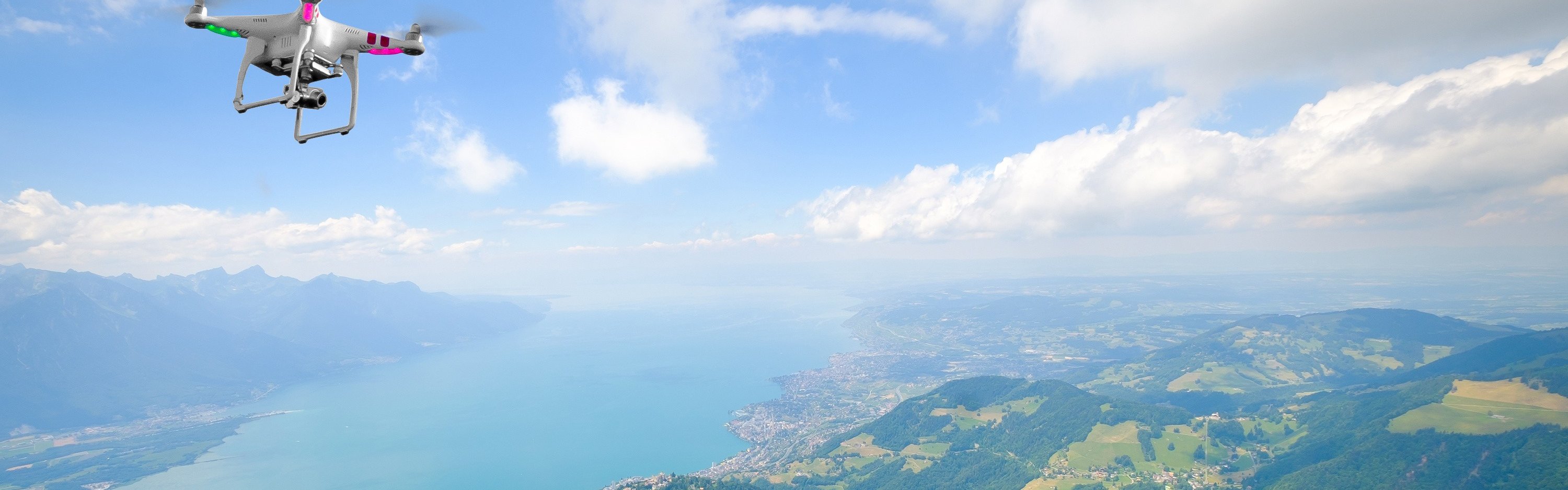
Long associated with military operations, surveillance or recreational activities, drones are progressively becoming tools for research, observation, prevention, logistics and emergency response. Whether aerial, terrestrial, maritime or underwater, they can reach difficult areas, produce accurate data, transport equipment, document changes in a territory and intervene rapidly when circumstances require it.
Their value, however, does not lie in the technology alone. It depends on how drones are integrated into a complete chain that includes sensors, scientific protocols, operator training, data processing, governance, privacy protection, economic models and the practical use of results by field actors.
The Geneva Forum is launching a Call for Disruptive Technologies Proposals to identify, develop and connect solutions that use drones to support social change, innovation, participatory research, humanitarian action and environmental transition.
This call is open to researchers, engineers, companies, start-ups, NGOs, international organisations, public authorities, universities, training institutions, field operators, young innovators and citizens wishing to propose a technology, method, service, pilot project or economic model based on the responsible use of drones.
|
The Geneva Forum invites you to present solutions capable of transforming drones into useful, accessible and responsible tools.
Proposals may notably address:
- the design of new drones or onboard systems;
- the development of scientific, environmental or health-related sensors;
- data collection, processing, visualisation and interpretation;
- onboard artificial intelligence or AI applied to image analysis;
- navigation, communication and coordination systems;
- solutions enabling operations in isolated or dangerous areas;
- platforms for sharing equipment and data;
- participatory science and research protocols;
- the training and certification of local operators;
- ethical, legal, regulatory and insurance frameworks;
- economic models capable of sustainably financing operations;
- projects that can be replicated across several territories or countries.
Proposed solutions may be at the idea, prototype, experimentation, demonstration or scaling stage. They may take the form of a technology, service, research programme, company, impact project or international infrastructure.
Fields of Application
Drones can contribute to addressing challenges in many sectors.
Health and Medical Logistics
Drones can transport vaccines, medicines, biological samples, blood, medical equipment or essential supplies to isolated or temporarily inaccessible territories.
They can also act as mobile laboratories, connect remote health centres or reduce response times in certain emergency situations.
Humanitarian Action and Disaster Management
Following an earthquake, flood, wildfire, landslide, storm or in an area affected by conflict, drones can help to:
- rapidly map affected areas;
- identify access routes that remain usable;
- locate isolated people;
- assess damage;
- detect secondary risks;
- deliver lightweight equipment;
- provide information to emergency teams.
Climate and Environment
Drones can observe glaciers, forests, rivers, wetlands, coastlines, agricultural land, reefs, urban areas and natural environments that are difficult to access.
They can notably be used to:
- monitor erosion, deforestation or desertification;
- measure changes in a glacier or watercourse;
- detect pollution or illegal activities;
- observe biodiversity without directly disturbing ecosystems;
- prevent wildfires and natural hazards;
- produce three-dimensional models;
- monitor ecosystem restoration;
- document the local effects of climate change.
Agriculture and Food Security
Drones can help farmers, cooperatives and researchers observe crop conditions, soil moisture, water requirements, plant diseases, erosion and agricultural biodiversity.
Proposals are particularly encouraged when they reduce the use of inputs, improve water management, make data accessible to small-scale producers or directly involve farming communities in research.
Scientific Research and Participatory Science
Citizens, young people, schools, universities and local operators can be trained to use drones and produce data according to shared scientific protocols.
Drones can therefore become participatory research instruments that make it possible to:
- multiply observations;
- monitor the same environment over several years;
- produce comparable data across territories;
- involve local populations in interpreting results;
- strengthen scientific and technical skills;
- connect local data with international research programmes.
Infrastructure and Territorial Planning
Drones can inspect bridges, buildings, power lines, water networks, railways, industrial facilities and infrastructure exposed to risk.
They can help detect defects earlier, reduce risks for human teams and improve the planning of maintenance operations.
Biodiversity Protection and Action against Illegal Activities
Drones can help detect poaching, illegal mining, forest clearing, pollution, illegal dumping or damage to protected areas.
Such uses must be accompanied by clear rules regarding data ownership, the rights of affected populations, operator safety and the use of collected information.
Challenges to Be Addressed
The potential of drones can only be fully realised if several challenges are addressed from the design stage of each project.
Data and Privacy Protection
Drones may collect images, geographical coordinates and information concerning people, communities or sensitive activities.
Proposals should specify:
- which data are collected;
- for what purpose;
- who may access them;
- how long they are retained;
- how they are secured;
- how affected people and communities are informed;
- how unintended or abusive uses are prevented.
Accessibility and Local Autonomy
A solution should not create a new form of technological dependency between territories that possess the equipment and those that merely use the resulting information.
Projects are encouraged to provide for:
- the training of local operators;
- local maintenance and repair;
- accessible interfaces;
- costs compatible with local circumstances;
- skills transfer;
- the participation of communities in the governance of data and operations.
Legal, Regulatory and Insurance Frameworks
Drones operate at the intersection of several regulatory fields, including aviation, data protection, security, environmental law, telecommunications, civil liability and humanitarian law.
Proposals may include solutions facilitating:
- flight authorisations;
- the traceability of operations;
- operator certification;
- risk assessment;
- insurance for equipment and missions;
- cooperation between different jurisdictions;
- the definition of rules adapted to scientific and humanitarian projects.
Aviation and Operational Safety
Drones must be capable of operating alongside aircraft, helicopters, emergency services, infrastructure and people on the ground.
Safety also concerns the risks of loss of control, breakdown, collision, hacking, interference, data theft and malicious use.
Environmental Impact
A drone used to protect the environment should also be assessed in terms of its own footprint: materials, batteries, energy consumption, repairability, lifespan, noise and possible effects on wildlife.
Projects proposing energy-efficient, repairable, modular, recyclable or low-impact equipment are particularly sought.
Civil Applications, Misuse and Dual-Use Technologies
Some technologies designed for research, mapping or rescue operations may also be used for intrusive surveillance or violence.
Proposals should incorporate prevention, control and governance mechanisms capable of reducing the risks of misuse.
Solutions and Partners Sought
The Geneva Forum is particularly interested in:
- manufacturers of aerial, terrestrial, maritime or underwater drones;
- developers of sensors and onboard systems;
- laboratories specialising in robotics, remote sensing, mapping or artificial intelligence;
- companies capable of processing and securing large volumes of data;
- experts in regulation, insurance, cybersecurity and data protection;
- NGOs and international organisations with operational needs;
- public authorities and territories wishing to host pilot projects;
- scientists capable of defining and validating protocols;
- institutions capable of training young people, citizens and local operators;
- investors, foundations and public bodies wishing to finance development and demonstration phases;
- entrepreneurs capable of building viable economic models around these solutions.
Partnerships may take the form of:
- a research and development project;
- a territorial experiment;
- a commercial agreement with technical assistance;
- a participatory science programme;
- an international consortium;
- a new company or organisation;
- a Global Impact Project;
- a training and certification system;
- a shared data collection and processing infrastructure.
Expected Results
Proposals should seek to deliver one or more concrete results:
- a measurable improvement in living conditions;
- a faster response in crisis situations;
- better knowledge of a territory or ecosystem;
- reduced risks for human operators;
- regular production of reliable scientific data;
- more equitable access to technology;
- the creation of local employment and skills;
- an economic model supporting project continuity;
- a technology or method that can be replicated in several countries;
- a responsible and transparent governance framework.
Relevant Sustainable Development Goals
Depending on their focus, solutions may contribute to the following goals:
- Goal 2: Zero Hunger;
- Goal 3: Good Health and Well-being;
- Goal 4: Quality Education;
- Goal 6: Clean Water and Sanitation;
- Goal 8: Decent Work and Economic Growth;
- Goal 9: Industry, Innovation and Infrastructure;
- Goal 10: Reduced Inequalities;
- Goal 11: Sustainable Cities and Communities;
- Goal 12: Responsible Consumption and Production;
- Goal 13: Climate Action;
- Goal 14: Life Below Water;
- Goal 15: Life on Land;
- Goal 16: Peace, Justice and Strong Institutions;
- Goal 17: Partnerships for the Goals.
Suggest Your Solution!
You may present, individually or together with other organisations, a technology, method, operational need, pilot project or cooperation proposal.
To propose a solution to the world in this field:
1. Choose the international conference within the Geneva Forum where you wish to present your idea or solution (see the list of conferences).
2. Fill in the form further down this page to submit the abstract of your presentation. Indicate “Yes” in response to the question Is your presentation a proposal for a disruptive technology?
3. Attend the next Geneva Forum and present your proposal during a five-minute pitch.
4. Participate in the collaborative workshop held after the presentations to meet potential partners, examine assumptions, clarify needs and prepare the project’s next steps.
On site, the Geneva Forum team may notably:
- connect you with existing research and participatory science programmes;
- identify organisations facing the problem addressed by your solution;
- facilitate discussions with scientists, operators, institutions and funders;
- support the design of a pilot project;
- contribute to structuring a viable economic model;
- explore the creation of a new programme or Global Impact Project;
- prepare the conditions for deployment and scaling.
Come with a technology, an idea or a problem to solve. Meet the people who can develop it with you and transform it into a concrete project serving positive change.
Contribution Form
|