Citizen and Participatory Science
- December 2026
- Citizen Science
- New-York - April
- Santiago - May
- Bangkok - September
- Cairo - October
- Geneva - December
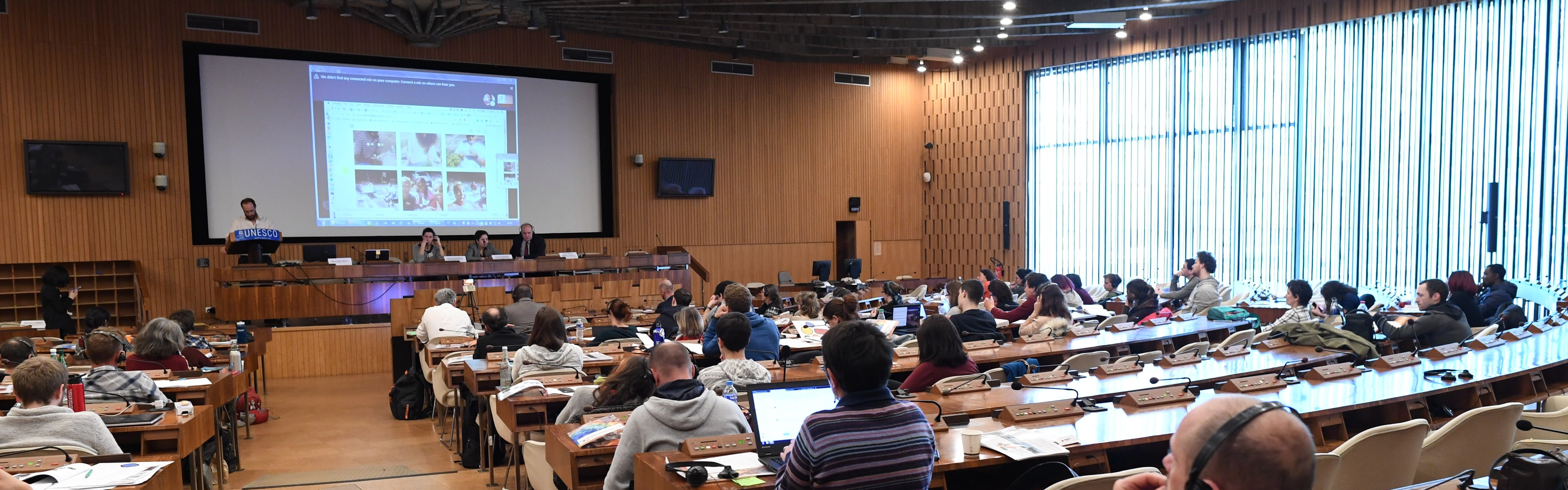
With its first edition in 2001 and a strategic renewal in 2015, the International Annual Conference on Citizen Science, Participatory Research, Crowd-Innovation, and Fab Labs for Peace and Development has been an annual milestone for advancing solutions and agile tools available to stakeholders in the field.
"Large-scale citizen-science alliances to sustainably transcend the silos of International Geneva and UN system and address new sources of impact finance"
Wednesday, 9 December 2026 in Geneva, Switzerland – registration required, see below
In partnership with


|
Framework
At a time when the silos of International Geneva are struggling greatly to collaborate cross-functionally and when sources of impact financing are looking for bold projects that translate into impact measurement in the field, International Geneva is seeking the emergence of systemic solutions.
This workshop will explore the power of large-scale citizen science alliances to create lasting bridges between all the fields of ecology, technology, solidarity and humanitarian action that characterize the landscape of International Geneva and that have the capacity to mobilize research, diplomacy, governance and finance. It is intended primarily for senior decision-makers from research laboratories, leaders of International Geneva, Ambassadors to the UN, as well as Geneva authorities and institutional investors. Family offices and philanthropists seeking projects of sufficient scale to match the volumes they need to commit are also among the audiences behind this workshop.
By combining concrete experiences in Participatory Science with impact finance mechanisms, in particular the real effects of resilience and capacity building that these projects manage to achieve, the workshop will show how these approaches make it possible to overcome compartmentalization, anchor innovation in civil society and generate projects of critical size, while positioning themselves at the level of global challenges and available financial capacities.
Objective: to build a shared framework for action where citizen science becomes a catalyst for cross-functional cooperation and a pool of massive projects, ready to receive financing of several hundred million.
Discussions between the stakeholders of this meeting will take place both in the form of a Round Table between the speakers, and in subgroup debates involving the Assembly audience.
This annual sharing space enables actors in the field to pool practices, challenges, solutions, ideas and needs
Participation options
You can:
- Attend the conference of your choice in person with your membership,
- Participate throughout the week with an impact project or come and join a project on site,
- Submit a content proposal for the conference (see further down this page),
- Get involved in running the event by choosing the appropriate membership (young people aged 16 to 25, see section Youth Geneva Forum).
Call for Contributions
| Participate in Major Citizen Science Projects: International Alliances and Collective Mobilization View the call for contributions here. |
| Measure the Impact of Participatory Science projects serving the SDGs View the call for contributions here. |
Proceedings from past years
View this section.
Program
SCHEDULES AND SPEAKERS
Program of the plenary session for all Geneva Forum participants.
Wednesday, December 10 afternoon
| ▪ 09:00-10:00: Welcome in the room and one-on-one meetings |
| ▪ 10:00: Opening of the Conference, introductory notes and protocol, introduction of the session Mr. Thomas EGLI, Host of the Geneva Forum (Geneva Forum) and Chair, Switzerland |
| ▪ 10:10-10:30: Pitch round (6 min. max. per speaker) |
| ● Dr Marina Demchenko, PhD, LCARE Institute ; Living Cities Action Research Ecosystem The City Researches Itself: From Citizen Science to a Global Action-Research Ecosystem for Living Cities |
| ● Chloé Larose, Objectif Sciences International NGO How can international organizations better recognize participatory research and project-based learning as tools that not only educate young people, but also allow them to produce knowledge and contribute meaningfully to policy and sustainable development? |
| ▪ 10:30-10:35: Statement of the question to be addressed |
| ▪ 10:35-11:15: Interactive round table (feedback session) Hosted by Thomas EGLI |
| ▪ 11:15-11:30: Break |
| ▪ 11:30-12:45: One-on-one meetings session |
| ▪ 12:45-13:00: Closing remarks |
| ▪ 13:00: End of the workshop |
| From 13:00: Networking opportunities (Networking) |
| At the end of this session a position paper will be published by the Geneva Forum to compile what was said and decided during the session. |
| ▪ 19:00: Geneva Forum Networking Dinner |
At the end of this session a position paper will be published by the Geneva Forum to compile what was said and decided during the session.
Registration and Membership
During the Geneva Forum, you can be a member of the public, contribute to impact projects or participate in the impact project development process, propose a poster presentation or submit a proposal for a presentation to be delivered during the event. (Deadline for submitting an abstract: see the call for contributions for the conference)
To participate in the Geneva Forum, you must subscribe to the “Event” Membership.
| By subscribing to one of the memberships, you become a member for a period of one year. |
Once your membership has been validated, you will receive all the necessary logistical information, as well as the link to generate your badge for each event, a few days in advance.
|