
Rights of Nature
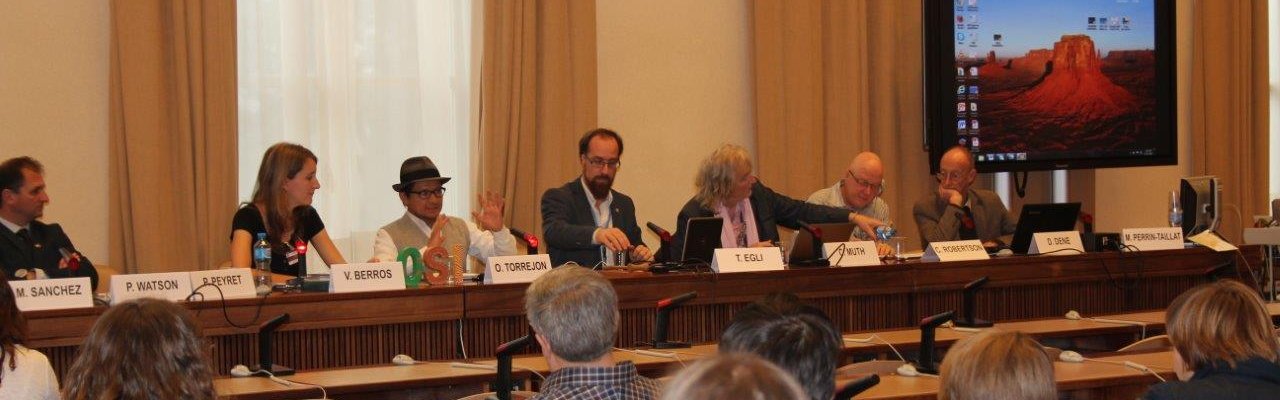
With its first edition in 2001 and a strategic renewal in 2015, the International Annual Conference on the Rights of Nature for Peace and Development has been an annual milestone for advancing solutions and agile tools available to stakeholders in the field.
"The Rights of Nature: cross-cutting impact projects for International Geneva."
Tuesday, 8 December 2026 in Geneva, Switzerland – registration required, see below
In partnership with



|
Framework
At a time when the recognition of the Rights of Nature is moving from theory to concrete implementation, this session will highlight national successes where these principles have been integrated into legal and economic frameworks. Legislators, economists, governments and civil society actors will exchange on textbook cases, reproducible successes and models to follow in order to place the Rights of Nature at the heart of decision-making.
Beyond law and public policy, the conference will also emphasize the essential role of informal education in building a non-anthropocentric relationship with Nature. Developing a culture of respect and reciprocity is essential for stable, healthy economic functioning in harmony with natural ecosystems.
Participants will leave with concrete examples, comparative perspectives and opportunities for collaboration, contributing to the progress of a global movement where the Rights of Nature become the foundation of resilience, justice and economic transformation.
Discussions between the stakeholders of this meeting will take place both in the form of a Round Table between the speakers, and in subgroup debates involving the Assembly audience.
Geneva - Tuesday, December 8, 2026 afternoon
This annual sharing space enables actors in the field to pool practices, challenges, solutions, ideas and needs
Participation options
You can:
- Attend the conference of your choice in person with your membership,
- Participate throughout the week with an impact project or come and join a project on site,
- Submit a content proposal for the conference (see further down this page),
- Get involved in running the event by choosing the appropriate membership (young people aged 16 to 25, see section Youth Geneva Forum).
Call for Contributions
| Rights of Nature and Informal Education: Toward a new non-anthropocentric environmental ethic View the call for contributions here. |
| What rights for the Ocean View the call for contributions here. |
Proceedings from past years
View this section.
Program
SCHEDULES AND SPEAKERS
You will find the full program here 15 days before the event.
| ▪ 14:00-15:00: Welcome in the room and one-on-one meetings |
| ▪ 15:00: Opening of the Conference, introductory notes and protocol, introduction of the session Mr. Thomas EGLI, Host of the Geneva Forum (Geneva Forum) and Chair, Switzerland |
| ▪ 15:10-15:30: Pitch round (6 min. max. per speaker) |
| ● Lynn SORRENTINO, MSc, Marine Environmental Protection, Sorrentino Consulting Roots of Rights: Mangrove Forests as the First Classroom for Ocean Consciousness and Pollution-Free Coastal Futures |
| ● Frederic SAMAMA, S&P Global/Sciences Po From Exploitation to Socialization: Rebuilding Our Relationship with Nature |
| ▪ 15:30-15:35: Statement of the question to be addressed |
| ▪ 15:35-16:15: Interactive round table (feedback session) Hosted by Thomas EGLI |
| ▪ 16:15-16:30: Break |
| ▪ 16:30-17:45: One-on-one meetings session |
| ▪ 17:45-18:00: Closing remarks |
| ▪ 18:00: End of the workshop |
| 19:00: Geneva Forum Networking Dinner |
At the end of this session a position paper will be published by the Geneva Forum to compile what was said and decided during the session.
Registration and Membership
During the Geneva Forum, you can be a member of the public, contribute to impact projects or participate in the impact project development process, propose a poster presentation or submit a proposal for a presentation to be delivered during the event. (Deadline for submitting an abstract: see the call for contributions for the conference)
To participate in the Geneva Forum, you must subscribe to the “Event” Membership.
| By subscribing to one of the memberships, you become a member for a period of one year. |
Once your membership has been validated, you will receive all the necessary logistical information, as well as the link to generate your badge for each event, a few days in advance.
|