
PROSPECTIVE MONOGRAPH - What governance for Ocean resilience from and through International Geneva?
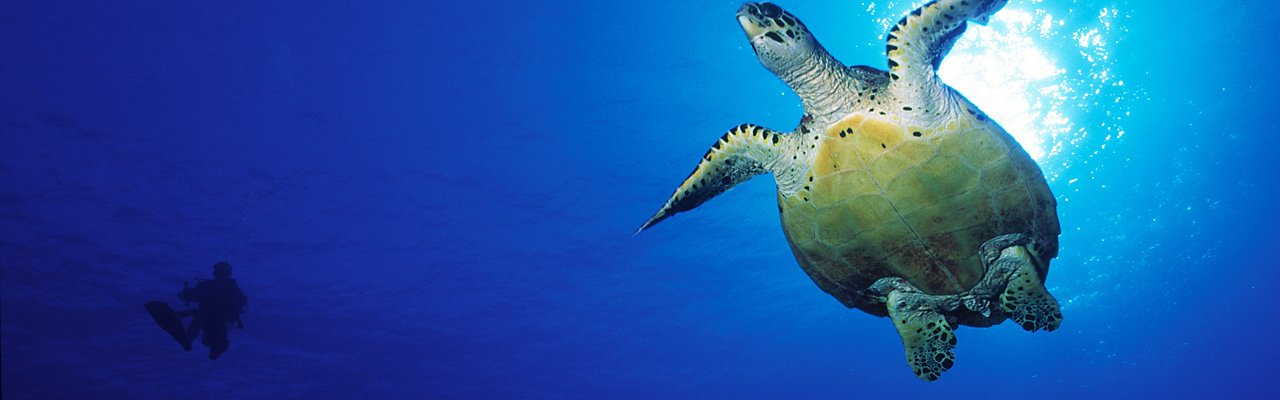
Breathing in Geneva already means depending on the Ocean.
When we breathe in Geneva, one breath of oxygen comes from the mountains and forests, while two others come from the Ocean. This observation, simple in appearance, is a major scientific fact that reminds us that even far from coastlines, our lives remain intimately linked to the health of the oceans. It invites us to look differently at what seemed distant, and to recognize a deeper reality: the Ocean is not elsewhere, but truly everywhere and at every moment around us.
From Geneva, this evidence takes on a particular resonance. The city is not coastal, it does not see the sea, it does not live to the rhythm of the tides, and yet it too breathes thanks to the Ocean. It depends on it for its climate, for its water balance, for the stability of the natural systems on which human societies depend. This invisible dependence imposes a new responsibility, and a fortiori for International Geneva: that of proposing Ocean governance that is not reserved for maritime countries alone, involving all countries, all institutions, but also all communities and all citizens.
Yet several governance frameworks already exist around the Ocean, while some are still missing.
The question is therefore not only how to protect the Ocean. It is how to organize, finance, connect and make operational a global resilience of the Ocean, from the coasts as well as from inland territories, from institutions as well as from citizens, from science as well as from education, from diplomacy as well as from concrete projects.
- A rich but still incomplete global governance
- A transformation already under way
- The central challenge: connecting
- International Geneva: a singular position
- From classic diplomacy to Impact Diplomacy
- A complementary governance dedicated to resilience
- Including all countries, including those without (…)
- The central role of Participatory Science
- Global Citizen Science Alliance for Ocean: a (…)
- Data as a common language
- Scientific gaming as an extension of participation
- Ocean Clubs as local anchors
- The rights of nature applied to the Ocean
- Toward an Ocean COP
- Coastal cities and regions: the level where the (…)
- Blue economy and blue finance: making projects readable
- The role of the Geneva Forum
- A governance that does not replace, but facilitates (…)
- From Geneva, with the whole world
|
Article written by the Geneva Forum
Editorial direction: Mr Thomas EGLI, CEO.
A rich but still incomplete global governance
Ocean governance already exists. It has been built progressively, over decades, through legal frameworks, international conventions, specialized institutions, scientific organizations, coalitions of States, NGOs and regional networks. Today it forms a dense, sometimes impressive architecture, which frames the law of the sea, the high seas, marine biodiversity, fisheries, maritime transport, the seabed, pollution and scientific cooperation, and soon plastic...
This architecture is necessary. It has made it possible to establish rules, create mandates, distribute responsibilities, and enable a form of cooperation between States and between institutions. But it remains too fragmented to fully respond to the resilience crisis facing the Ocean. Each actor acts within its own field, each organization pursues its mandate, each convention responds to its purpose, each network produces its own data and its own priorities.
The result is paradoxical: the Ocean has many governance frameworks, but it does not yet have sufficiently integrated governance of its resilience. Rules exist, but not always the operational capacities to connect them to the field. Data exist, but not always the bridges needed to make them useful to decision-makers, funders and citizens. Funding exists, but not always projects that are sufficiently clear, structured and comparable to attract it. Citizens are ready to act, but not always the mechanisms allowing them to contribute to useful scientific action.
It is precisely this gap that must now be addressed.
A transformation already under way
In recent years, several major developments have shown that global Ocean governance is entering a new phase. The BBNJ agreement on the high seas marks a structuring step. The United Nations Decade of Ocean Science is strengthening scientific mobilization. A future Ocean COP is taking shape, with protocol leadership from New York, while its operational secretariat
|